

Sleep inertia is the groggy, foggy feeling you get in the first minutes after waking up: you think slower, you're clumsy and all you want is to get back into bed. It's normal, it happens to everyone and it usually lasts 15 to 60 minutes, with the worst of it packed into the first half hour.
In this guide we explain why it happens, what makes it worse, how long it lasts according to research and what you can do to snap out of it faster. You'll also see why that groggy state is exactly when hitting snooze feels most tempting.
What is sleep inertia?
Sleep inertia is the transition period between being asleep and being fully awake. During that window your brain has switched consciousness back on, but it isn't running at full capacity yet. The most common symptoms are:
- Heaviness and a strong urge to keep sleeping.
- Disorientation: it takes a few seconds to work out what time it is or what you need to do.
- Slow thinking, weaker short-term memory and more mistakes on simple tasks.
- Clumsy movements.
It isn't a disorder: it's a normal part of waking up. The review Sleep inertia: current insights, published by Cassie Hilditch and Andrew McHill in Nature and Science of Sleep (2019), describes it as a third process regulating sleep, alongside accumulated sleep pressure and the circadian clock.
What does vary a lot is how intense it feels. Some mornings you're up and clear-headed; others you feel like you've been hit by a truck, even after the same number of hours in bed.
How long does sleep inertia last?
It depends on the person and the night, but these are the ranges research points to:
| Time after waking | What usually happens |
|---|---|
| First 5–15 minutes | The most intense phase: more grogginess, more errors and the strongest pull back to sleep. |
| Up to about 30 minutes | Most of the effect wears off in this time, according to Hilditch and McHill's 2019 review. |
| 30–60 minutes | You feel awake, but some mental tasks aren't at 100% yet. |
| More than 1 hour | Can happen if you slept too little or woke during your “biological night”. In one lab study, performance on addition problems took up to 3.5 hours to fully recover. |
One finding tends to surprise people: in a study published in JAMA in 2006 (Wertz and colleagues), performance on an arithmetic test right after waking from 8 hours of sleep was worse than after a full night without sleep. It doesn't last long, but in those first minutes the effect is real.

Want to stop hitting snooze starting tomorrow?
LevoUp won't turn off until you complete a mission. Try it free for 3 days.
Why you wake up groggy: the causes
Scientists don't know the exact mechanism yet, but they do know which factors make sleep inertia stronger:
1. Not sleeping enough
This is the clearest factor. When you build up sleep debt, or stay awake for a long time before going to bed, sleep inertia is more intense and lasts longer.
2. Waking up against your body clock
If your alarm goes off during what your body still considers “night” (for example at 5:00 am when you usually wake at 8:00, or after a time change), the grogginess is worse. Your body temperature and hormones are still in sleep mode.
3. Waking up in the middle of deep sleep
This is the most popular explanation, and there's some truth to it: waking from slow-wave sleep has been linked to more grogginess, especially after long naps. Still, the 2019 review notes that newer studies don't always find this link, so it isn't the only factor.
4. Naps longer than 30 minutes
A long nap gives you time to slip into deep sleep. That's why you sometimes get up from a 90-minute nap feeling worse than before.
5. An abrupt wake-up… on repeat
Every time the alarm wakes you, sleep inertia starts over. Hit snooze three times and you go through it three times. And it's in that state, with your brain running at half speed, that you decide whether to hit snooze again.
8 ways to reduce sleep inertia
There's no magic switch to make it disappear, but you can make it shorter and milder. These are the measures with the most support:
1. Get enough sleep
Most adults need 7 to 9 hours. This matters more than anything else: the more sleep you owe, the heavier the morning.
2. Keep a regular schedule
Waking up at a similar time every day, weekends included, helps the alarm go off when your body is already getting ready to wake up.
3. Time your bedtime around sleep cycles
Sleep moves in cycles of roughly 90 minutes. If you plan your bedtime so the alarm rings at the end of a cycle, you're more likely to wake from light sleep:
What time should you go to bed?Find out when to go to bed or wake up based on your 90-minute sleep cycles. Open calculator4. Get light as soon as you're up
Open the blinds, step outside or switch on bright lights. In the 2019 review, light after waking improved how alert people felt, though not always their measured performance. Morning light also helps set your body clock for the following days.
5. Pick a more melodic alarm sound
A study from RMIT University (Australia) published in PLOS ONE in 2020 found that people who woke to melodic alarms reported feeling less groggy than those who used harsh, loud beeps. It's a survey-based study, but changing your alarm sound costs nothing.
6. Move and engage your brain
Getting up, walking to another room or doing something that needs attention pulls you out of sleep mode faster than scrolling in bed. There are no conclusive studies on exercise, but lying down in the dark definitely makes inertia drag on.
7. Coffee, yes, but strategically
Caffeine has the best evidence of any countermeasure, but it isn't instant: it takes a while to kick in. A coffee won't save the first few minutes, but it helps over the next half hour. Skip it in the afternoon so it doesn't wreck the next night.
8. Keep naps short
If you nap, keep it to 20–30 minutes. That makes it less likely you'll fall into deep sleep and wake up worse.
How a mission alarm gets you out of sleep inertia
The real risk of sleep inertia isn't feeling groggy, it's making decisions in that state. At 6:30 am, half asleep, “five more minutes” sounds like a brilliant idea. That's why an alarm that won't let you decide until your brain has actually woken up works better.
With LevoUp, the alarm has no snooze button: it only turns off when you complete a mission. You can choose to solve a math problem, write an affirmation, take a photo of the sky, touch grass or make your bed (push-ups, squats and find an object are coming soon). Several of them combine exactly what helps against sleep inertia:
- Photo of the sky: makes you open the window or step outside, so you get natural light right after waking.
- Math problem or affirmation: switch on attention and working memory, the functions hit hardest when you wake up.
- Make the bed or touch grass: get you on your feet and moving.
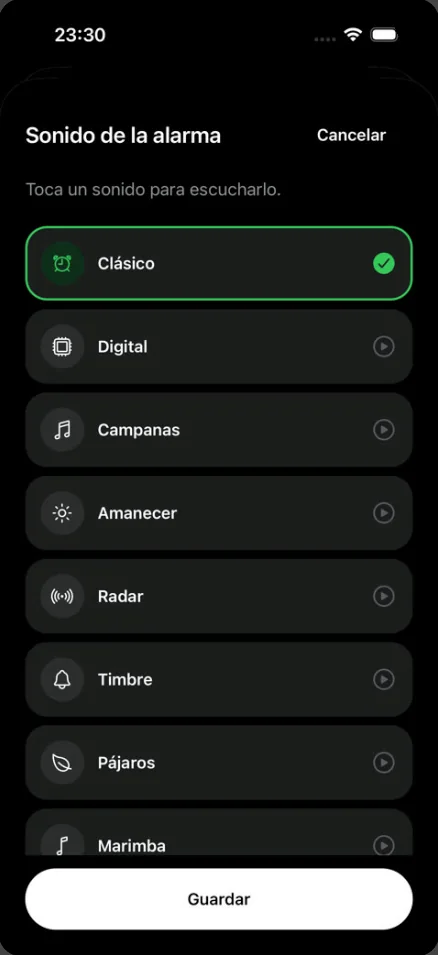
You can also pick a gentler alarm sound, such as “Sunrise”, “Birds” or “Marimba”, instead of a harsh beep.

If you struggle to hear your alarm, read our guide on what to do if you sleep through your alarm. And if snooze is the problem, see whether hitting snooze is bad and how to stop hitting snooze.
A sample morning to wake up clearer
Here's what a 7:00 am wake-up designed to shorten sleep inertia could look like:
- 11:15 pm – Go to bed (about 7.5 hours before the alarm: five full cycles, plus the time it takes to fall asleep).
- 7:00 am – The alarm rings with a melodic sound. No snooze.
- 7:01 am – Get up, open the window and take the photo of the sky: light and movement in the first minute.
- 7:05 am – Water, then a shower or at least splash your face.
- 7:20 am – Breakfast and coffee. By now the worst of the inertia has passed.
- 7:30 am – If you can, save tasks that need deep focus for a bit later.
If you're moving your alarm earlier, for example to start waking up early, move your bedtime earlier too: getting up earlier without sleeping more is a recipe for longer sleep inertia.
When to see a doctor
Sleep inertia is normal, but it's worth talking to a doctor if:
- The grogginess lasts several hours almost every day, even though you sleep 7–9 hours.
- You're very sleepy during the day or doze off when you shouldn't.
- You act confused when you wake up and don't remember it later (sometimes called “sleep drunkenness”).
- You snore loudly or someone notices you stop breathing while you sleep.
In those cases there may be a sleep disorder behind it, and a specialist can assess it. For everyone else, a few habit changes usually make mornings a lot easier.
Frequently asked questions
What is sleep inertia?
It's the groggy state right after waking up: sleepiness, disorientation, slow thinking and clumsiness. It's a normal part of moving from sleep to wakefulness and fades on its own.
How long does sleep inertia last?
Usually 15 to 60 minutes, with most of the effect in the first half hour. If you slept too little or woke very early for your body clock, it can last more than an hour.
Why do I wake up so groggy some days?
Mostly because of sleep debt, irregular schedules, waking while your body is still in its “biological night” or after a long nap. Waking from deep sleep may also play a part.
How do I get rid of sleep inertia faster?
Get up, find natural light, move and do something that engages your attention. A melodic alarm sound and enough sleep help. Caffeine helps too, but it takes a while to kick in.
Does hitting snooze make sleep inertia worse?
It doesn't help: each new alarm jolts you awake and sleep inertia starts over. And you decide to snooze exactly when your brain is groggiest. A mission alarm like LevoUp takes that decision away.
Is sleep inertia a medical condition?
No, it's normal. But if the grogginess lasts for hours almost every day, you're very sleepy during the day or you act confused when you wake up, it's worth seeing a doctor.