

The short answer: hitting snooze now and then isn't dangerous, but it doesn't help you rest more either. The extra minutes tend to be light, broken sleep, and a daily snooze habit usually goes hand in hand with too little sleep or an irregular schedule.
In recent years, two studies made headlines that seem to contradict each other: one says snoozing is “not so bad,” the other recommends avoiding it. In this guide we explain what each one found, what happens in your body between alarms, when snoozing really does hurt you and what to do if you want to quit.
The short answer: it's not harmful, but it rarely helps
If you hit snooze a couple of times once in a while, you're not damaging your health. There's no evidence that a few minutes of snoozing has serious effects on its own.
The problem lies in three things that tend to come with the habit:
- The extra minutes aren't worth much. Between alarms you sleep in pieces: you wake up, drift off, and get woken again. That fragmented sleep isn't as restful as continuous sleep.
- It's a signal. If you need to snooze almost every morning, you're most likely not sleeping enough, or your schedule shifts a lot from day to day.
- It steals time from your morning. Ten or twenty minutes of alarms are ten or twenty fewer minutes for breakfast, moving your body or leaving without rushing.
In other words: snoozing isn't poison, but it's a bad investment. The same time, slept in one stretch, would rest you more.
What the latest studies say
Stockholm University study (2023): “not so bad”
Researchers at Stockholm University's Stress Research Institute published two snooze studies in the Journal of Sleep Research in 2023. In the first, a survey of 1,732 people, 69% said they snoozed or used multiple alarms at least sometimes. Snoozers tended to be younger, more “night owls” and to sleep less on workdays.
In the second, 31 habitual snoozers slept in a lab. One morning they snoozed for 30 minutes; another morning they got up straight away. The result: total sleep was similar, snoozing didn't change cortisol or mood, and right after waking they did slightly better on some cognitive tests. On the other hand, sleep during those 30 minutes was less efficient, with more awakenings.
The authors themselves note it was a small study, over a single morning, with only people already used to snoozing.
Mass General Brigham study (2025): “avoid it if you can”
In May 2025, a team at Brigham and Women's Hospital (Mass General Brigham, Boston) published an analysis in Scientific Reports of about 3 million nights from more than 21,000 users of the Sleep Cycle app. They found snooze was hit on about 56% of nights, averaging around 11 minutes per morning. The heaviest snoozers — on more than 80% of mornings — racked up about 20 minutes a day and had more irregular sleep schedules. People snoozed more on weekdays than on weekends.
The researchers' advice was clear: set your alarm for the latest time you can get up and get out of bed with the first one. Their reasoning is that the last hours of the night are rich in REM sleep, and snoozing interrupts that stage and swaps it for light sleep. Worth knowing: the study was supported by Sleep Cycle, the app that provided the data.
So who's right?
Both, partly. The Swedish study shows that an occasional half-hour of snoozing doesn't leave you worse off than jumping straight out of bed. The Boston study shows that, in real life, snoozing is very common and goes along with irregular schedules. Neither shows that snoozing gives you better rest than sleeping those same minutes in one go.

Want to stop hitting snooze starting tomorrow?
LevoUp won't turn off until you complete a mission. Try it free for 3 days.
What happens in your body every time you snooze
To see why the extra minutes are worth so little, look at a typical morning with a 6:30 alarm and three 9-minute snoozes:
| Time | What happens |
|---|---|
| 6:30 | The alarm goes off. It wakes you, possibly in the middle of a sleep cycle. |
| 6:31–6:39 | You fall back asleep, but only lightly: there's no time to reach deep stages. |
| 6:39 | Second alarm. Another abrupt awakening. |
| 6:40–6:48 | Another stretch of light, broken sleep. |
| 6:48 | Third alarm. Now you're running late. |
| 6:57 | You get up in a rush, 27 minutes after the first alarm. |
If you'd set the alarm for 6:57 in the first place, you'd have slept those 27 minutes straight. And when you wake, sleep inertia is waiting either way: that groggy feeling in the first few minutes when you think more slowly. Each new wake-up drops you back into that state — and that's exactly the state in which you decide whether to hit snooze again.
When snoozing does hurt you
Hitting snooze costs more in these situations:
- When you do it every day. If you already count on those 20 minutes of alarms, they're not “extra”: that's your real wake-up time, just slept in pieces.
- When you sleep less than you need. Most adults need 7 to 9 hours. If you're below that, snoozing is a symptom, not the fix.
- When your schedule varies a lot. Going to bed and getting up at very different times confuses your internal clock and makes the alarm catch you at a worse moment.
- When it makes you late. The stress of rushing out and the feeling of starting the day “failing” outweigh the minutes gained.
- When you set lots of alarms. Five backup alarms teach your brain that the first one doesn't count.
On the other hand, if you snooze once on a lazy Saturday, enjoy it: there's nothing to worry about.
How to wake up without needing the snooze button
If you want to drop the habit, the key isn't willpower at 6 a.m. — it's preparing the night before. What works best:
1. Set the alarm for your real wake-up time
That's the Boston researchers' direct advice: the latest time you can get up. If you always snooze for 20 minutes, push the alarm back 20 minutes and sleep them in one go.
2. Go to bed on time
If waking up is hard, the first step is getting enough sleep. To have the alarm ring at the end of a sleep cycle, when getting up is easier, work out your bedtime:
What time should you go to bed?Find out when to go to bed or wake up based on your 90-minute sleep cycles. Open calculator3. Keep a regular schedule
Getting up at roughly the same time every day, weekends included, helps your body anticipate the alarm.
4. One alarm, out of reach
One alarm, seriously. And if you can, keep the phone out of reach of the bed so turning it off means getting up.
5. Get rid of the snooze button
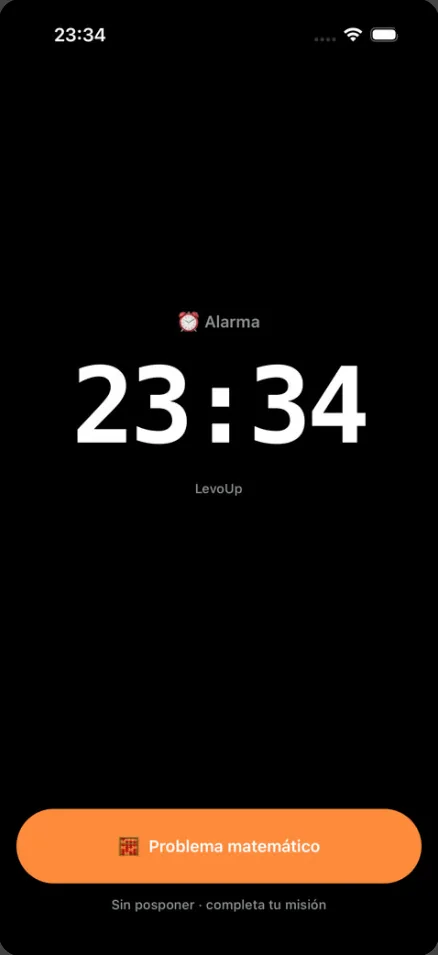
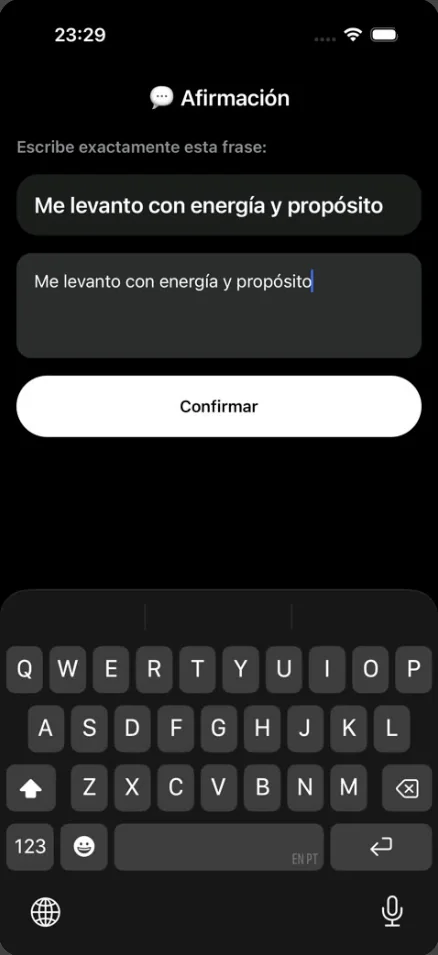
A mission alarm has no snooze button: it only turns off when you complete a task. In LevoUp you can choose to solve a math problem, type an affirmation, photograph the sky, touch grass or make your bed. By the time you're done, your brain is out of sleep inertia and the decision to crawl back into bed no longer exists.
If you want a step-by-step plan, see our guide on how to stop hitting snooze, with 9 tips and a 7-day plan. And if you're picking an app, we compare options in the best alarm app for iPhone and in LevoUp vs. Alarmy.
When to see a doctor
If you sleep 7 to 9 hours on a regular schedule and still find it extremely hard to wake up, feel very sleepy during the day, snore loudly or someone notices you stop breathing in your sleep, there may be a sleep disorder behind it. In that case, rather than switching alarms, it's worth talking to a doctor.
For most people, though, hitting snooze is just a habit. And like any habit, it can be changed.
Frequently asked questions
Is snoozing for 5 minutes bad?
It isn't harmful, but it doesn't help you rest more either: those minutes are light, broken sleep. If you do it every day, it's better to set the alarm 5 minutes later and sleep them in one stretch.
Does hitting snooze make you more tired?
It can. Each new alarm jolts you awake and puts you back into sleep inertia, that groggy feeling of the first few minutes. A Stockholm University study (2023) found no worse performance after 30 minutes of snoozing in habitual snoozers, but sleep during that time was less efficient.
What does science say about hitting snooze?
A Stockholm University study in the Journal of Sleep Research (2023) concluded that 30 minutes of snoozing didn't impair performance in people used to it. A Mass General Brigham study in Scientific Reports (2025) found snooze is used on about 56% of nights and recommended getting up with the first alarm.
How many times is it normal to hit snooze?
There's no “normal” number, but if you snooze almost every morning you're probably not sleeping enough or your schedule is irregular. Ideally, get up with a single alarm set to your real wake-up time.
Is it better to set several alarms or just one?
Just one. Multiple backup alarms fragment your last stretch of sleep and teach your brain that the first one doesn't count.
How do I stop hitting snooze?
Set the alarm for your real wake-up time, go to bed on time, keep a regular schedule and leave your phone away from the bed. A mission alarm like LevoUp removes the snooze button: it only turns off when you complete a task.